
Parts of an Engagement Ring
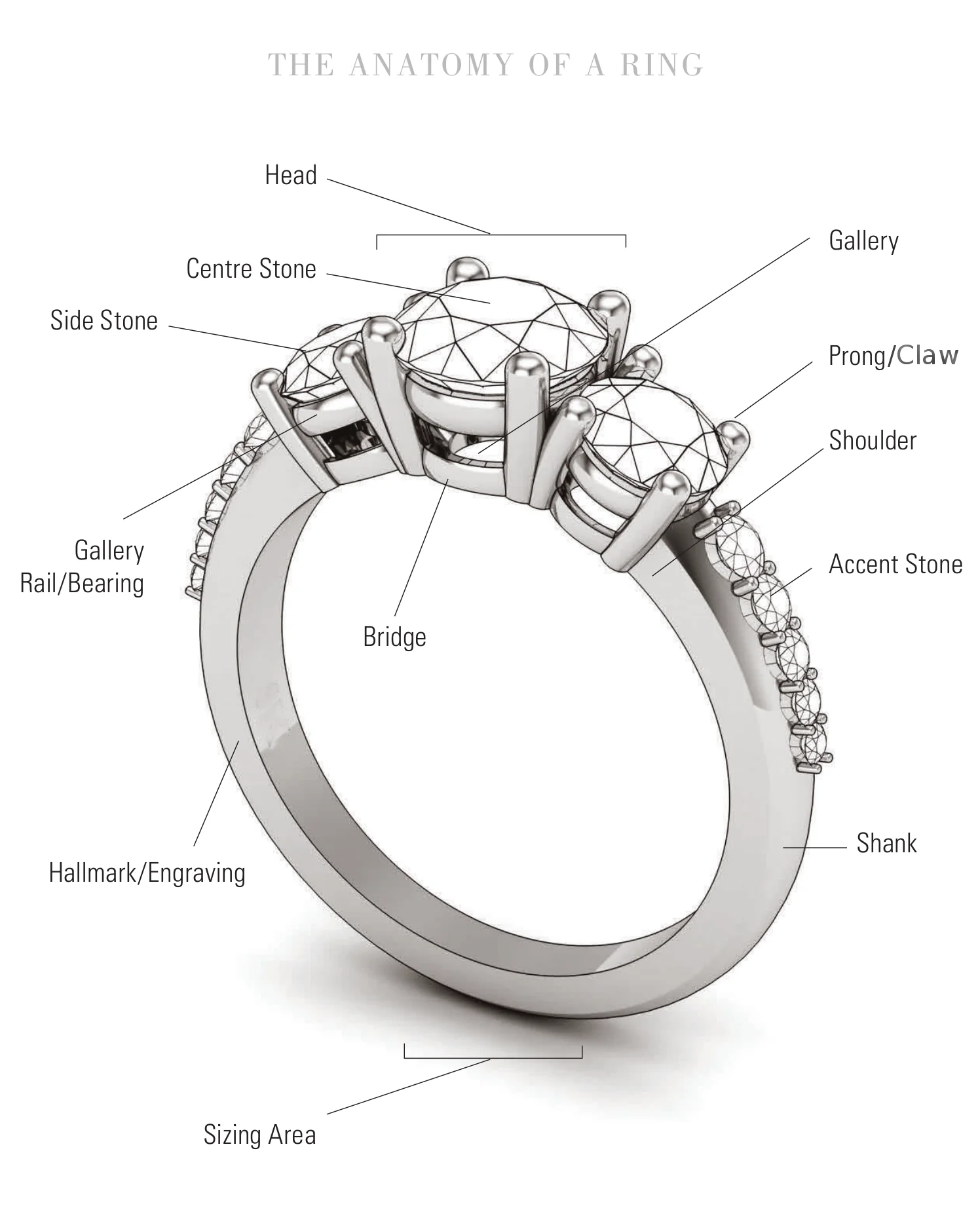
Understanding the anatomy and structure of an engagement ring empowers you to make thoughtful choices during your shopping journey. It helps you articulate your preferences, ask the right questions, and choose a ring that balances beauty with long-term durability.
Important Engagement Ring Terminology
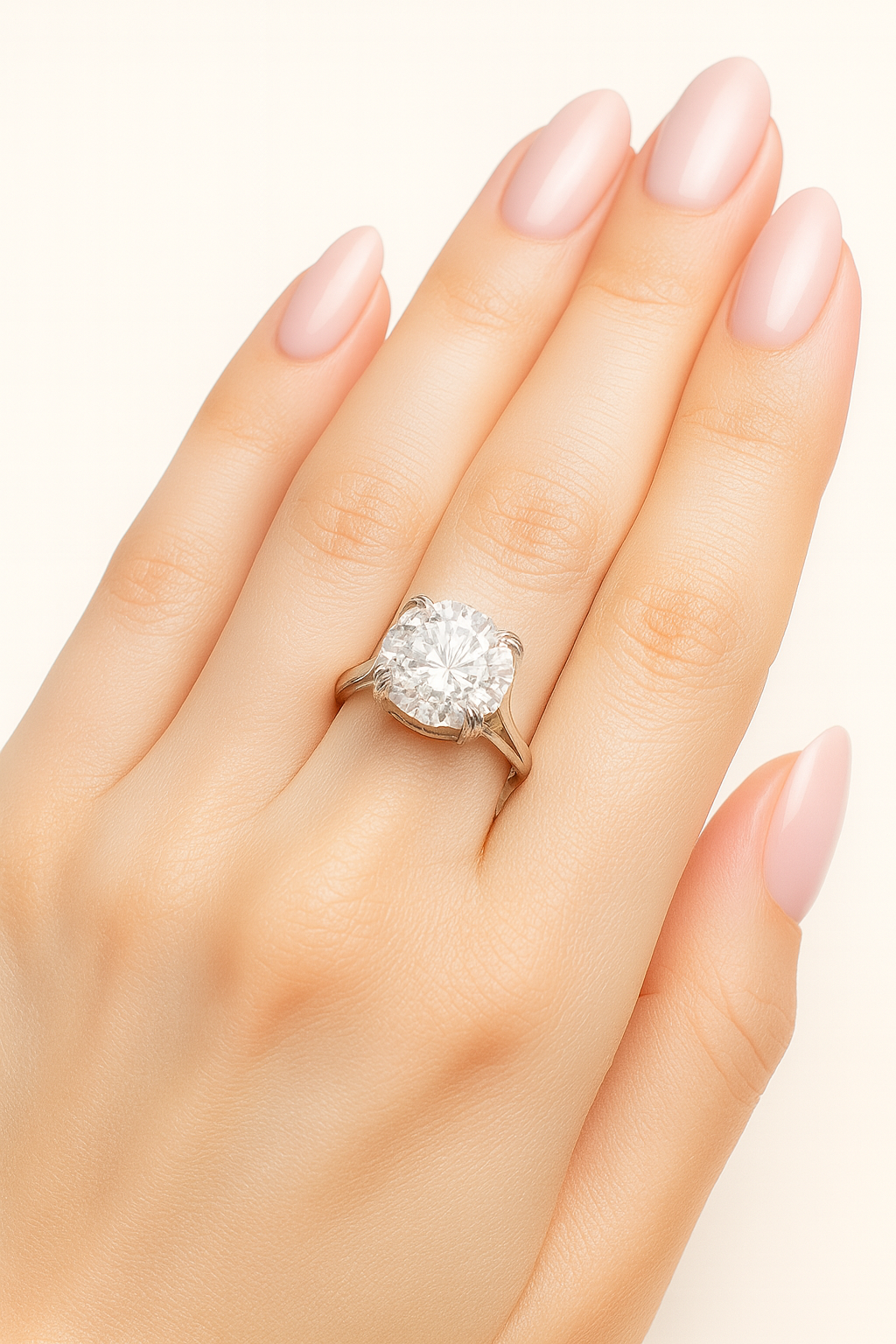
Center Stone
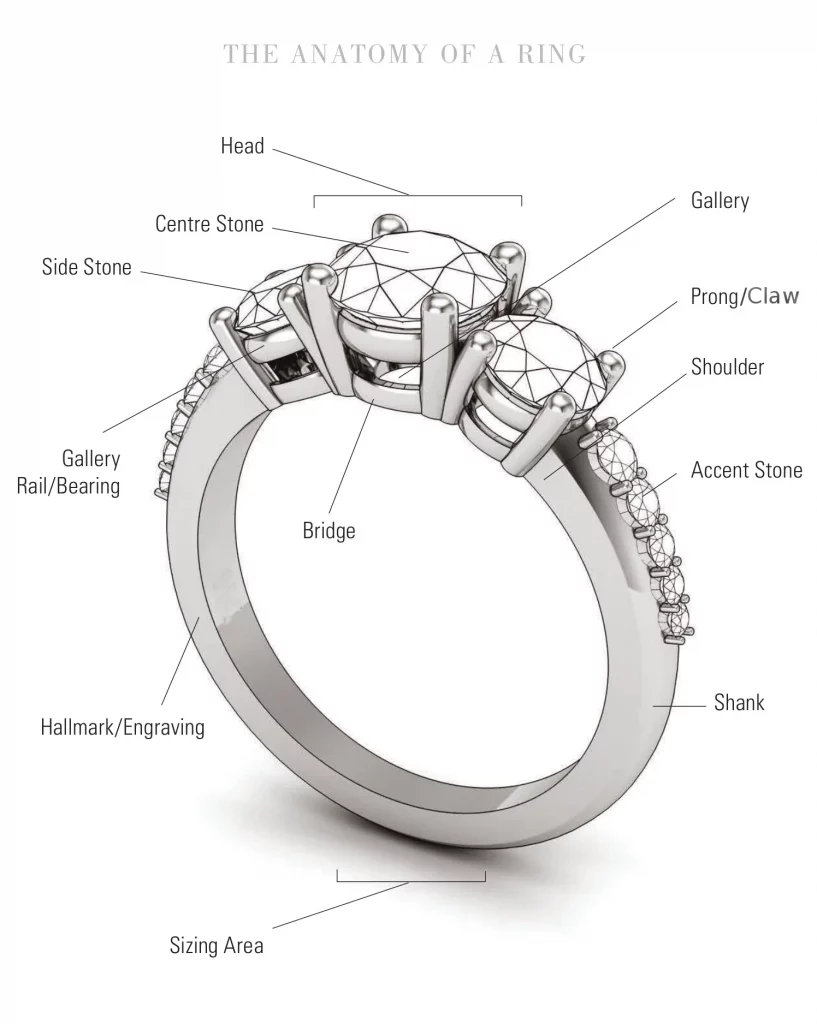
The center stone is the main focal point of an engagement ring. It’s typically the largest and most valuable element. While diamonds are the traditional choice for their brilliance and durability, many modern couples opt for sapphires, moissanite, or other colored gemstones to reflect personal style.
Gallery
The gallery is the space beneath the center stone, visible from the side. Often decorative, this area connects the head to the shank and allows light to pass through the stone from below. A well-designed gallery adds both support and elegance.
Head
Also known as the crown or basket, the head holds the center stone securely in place. Its design influences how the stone is displayed, how much light reaches it, and how it sits on the finger. Popular head styles include basket, prong, bezel, trellis, cathedral, tulip, and v-tip.
A high-set head can make the stone appear larger but may catch on clothing. A lower-set head offers a more subtle profile and added protection. Metal color also plays a role—white metals can enhance diamond brilliance, while yellow or rose gold may create contrast.
Accent Stones
Accent stones are small diamonds or gems used to decorate the band, gallery, or surround the center stone (such as in halo designs). These stones:
- Add brilliance and texture
- Highlight the center stone by contrast or coordination
- Can be matched or contrasted in shape and cut
Bridge
Located beneath the head, the bridge connects the setting to the shank. It rests against the finger when worn and plays a key role in structural support, helping the ring sit upright without twisting.
Setting
The setting refers to how the gemstone is held in place. It impacts both the ring’s appearance and the security of the stone. Common setting types include solitaire, three-stone, halo, hidden halo, bezel, and cathedral. Each setting offers a unique look and varying degrees of protection and visibility for the stone.
Shank
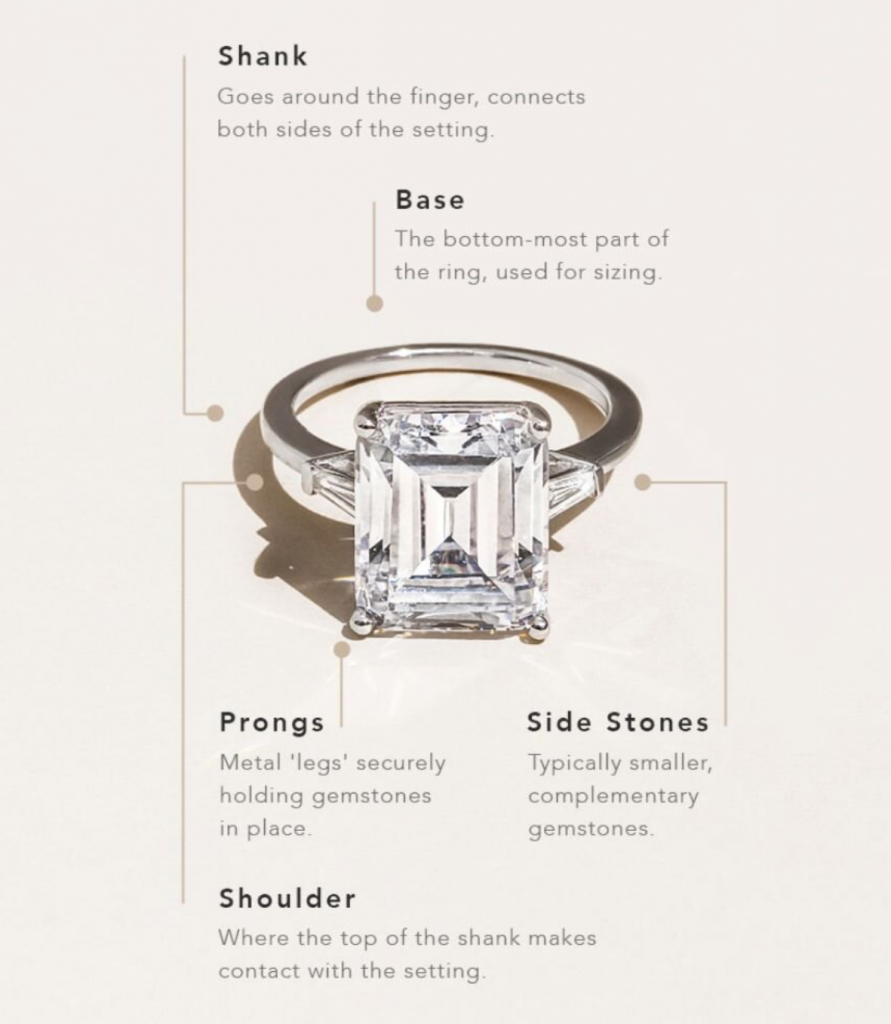
The shank — also called the band — is the part that wraps around your finger. It’s the structural foundation of the ring and plays a major role in comfort and style. Shank widths typically range from 1.5mm to 3mm; wider shanks provide more support but can feel heavier.
Sizing Area/Bar
The sizing area, or sizing bar, is the lower part of the shank opposite the setting. This smooth, undecorated section allows jewelers to resize the ring when needed. Its width can affect comfort, with wider areas offering more stability but potentially feeling bulkier.
Shoulder
The shoulder is the upper portion of the shank, where it meets the head. It helps create a smooth transition between the band and center setting. Shoulder designs vary — some are tapered or flared, while others are angular or straight — and significantly impact the ring’s silhouette.
Prongs
Prongs are the tiny metal arms that grip the center stone. Though small, they’re critical for security. They minimize metal coverage while holding the stone firmly in place.
- Common prong counts: 4, 6, 8, and double-prongs
- Common prong styles: Claw, tab, round, and V-prong
Prongs are often made from the same metal as the rest of the setting, but platinum is sometimes used for extra durability. Over time, prongs may wear or loosen and should be professionally checked at least once a year.
Side Stones
Side stones are larger accent stones set beside the center stone, often in symmetrical arrangements. In three-stone rings or designs with tapered baguettes, they add visual balance and sparkle while enhancing the ring’s overall complexity.
Hallmark
A hallmark is a small engraving on the inner band that provides information about the ring’s metal and origin. These markings may include:
- Metal type and purity (e.g., 14K, PT950)
- Manufacturer’s logo or designer’s signature
- Country of origin or serial numbers (for branded or high-end pieces)
Hallmarks are often found near the sizing bar and may require magnification to see clearly.
A WordPress Commenter
Hi, this is a comment.
To get started with moderating, editing, and deleting comments, please visit the Comments screen in the dashboard.
Commenter avatars come from Gravatar.